Stop Small Damage Before It Spreads
Crack and chip sealing in Greensburg that prevents water intrusion and reduces the risk of freeze-thaw expansion across your pavement.
When cracks appear in your driveway or parking lot, they allow water to seep beneath the surface where it weakens the base and expands during freezing temperatures, turning small surface cracks into larger breaks and potholes. Sealing these cracks early prevents water intrusion, reduces further deterioration, and extends the pavement's lifespan without the need for resurfacing or replacement, making it a cost-effective maintenance step for properties throughout Greensburg.
Mike Bryer Paving provides crack and chip sealing for residential and commercial asphalt surfaces in Greensburg and surrounding areas. The service is a recommended preventative maintenance step before sealcoating, as it addresses minor surface damage that could worsen if left untreated. Sealing works by filling cracks with a durable rubberized material that flexes with temperature changes and keeps water out, reducing the risk of freeze-thaw expansion and further deterioration.
If you notice cracks forming in your Greensburg pavement, get in touch to schedule an evaluation and discuss sealing before the damage spreads.
How Sealing Protects Pavement From Water Damage
The sealing process begins by cleaning out cracks to remove dirt, debris, and vegetation, then applying a hot rubberized sealant or cold-pour filler depending on crack size and temperature conditions. In Greensburg, where seasonal temperature swings cause asphalt to expand and contract, the sealant is chosen for its flexibility so it moves with the pavement instead of cracking apart. Small chips and surface voids are also filled to create a uniform surface that resists water penetration.
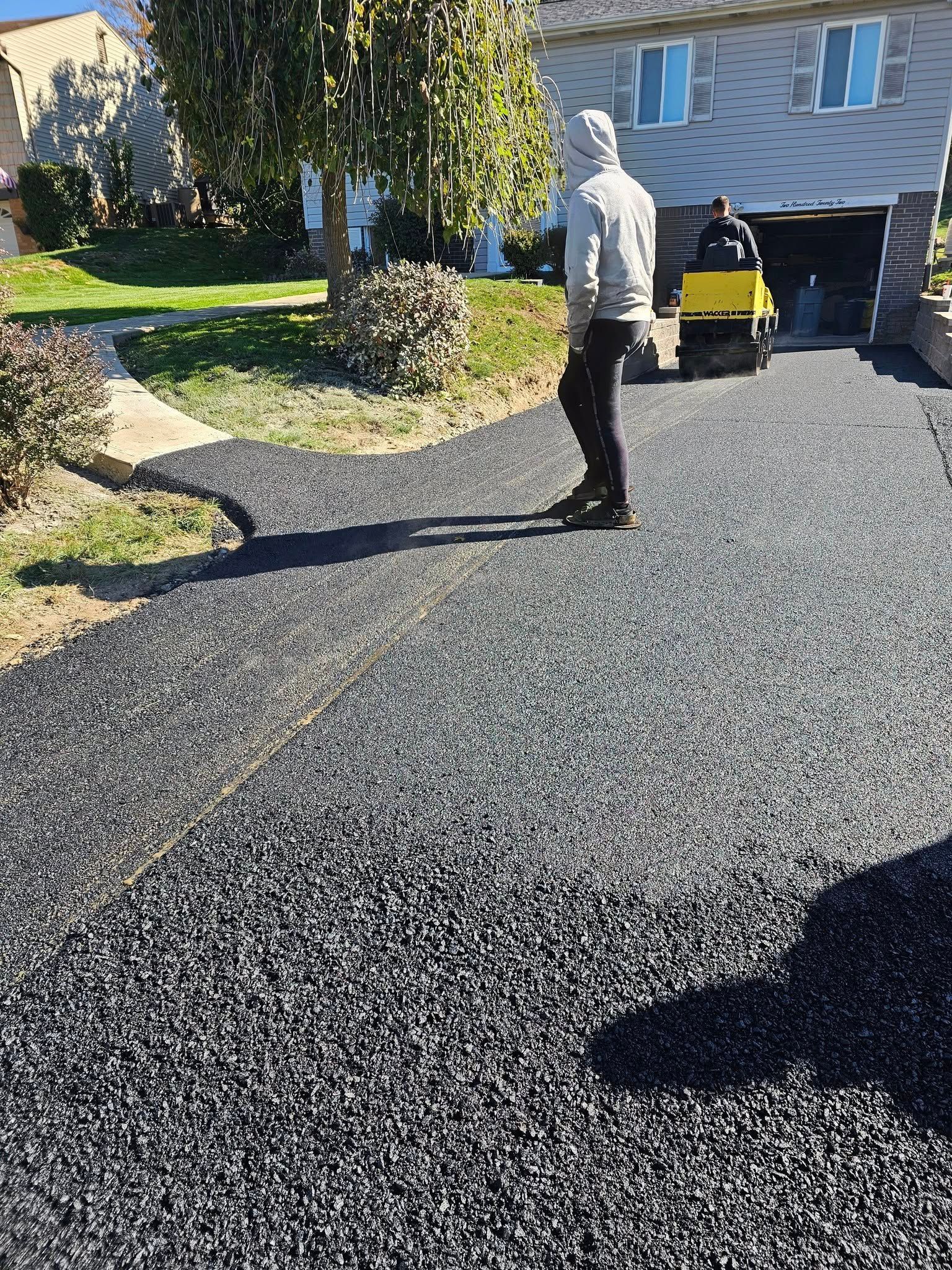
After sealing, you will notice the cracks are filled and the surface looks more uniform. Water will no longer run into the openings, and the pavement will be better prepared for sealcoating or other protective treatments. Sealed cracks are visible as darker lines across the asphalt, but they no longer pose a structural risk or allow moisture to reach the base layer.
Crack sealing is most effective when done early, before the cracks widen or the base beneath begins to fail. It works well as part of a regular maintenance schedule and is often combined with sealcoating to provide both structural protection and surface preservation. Mike Bryer Paving evaluates each surface individually to determine which cracks can be sealed effectively and which may indicate deeper issues that require more involved repair.
What Homeowners Want to Know About Sealing
Before scheduling crack sealing, it helps to understand when the work should be done, how long the sealant lasts, and what signs indicate that pavement damage has progressed beyond sealing alone.
If your Greensburg pavement shows early cracking or surface damage, Mike Bryer Paving provides crack and chip sealing as a cost-effective way to prevent water intrusion and extend pavement life. Learn more about your options by contacting us to schedule an evaluation.