Restore Smoothness Without Starting Over
Asphalt resurfacing in Greensburg that applies a fresh layer over structurally sound pavement to improve appearance and extend service life.
When your driveway or parking area shows surface wear but the base remains intact, resurfacing applies a new asphalt layer on top of the existing pavement instead of removing and rebuilding everything from scratch. This approach restores a smooth driving surface, improves appearance, and adds years of durability without the cost or disruption of full replacement, and it works well for properties in Greensburg where the original structure is sound but the top layer has aged or deteriorated.
Mike Bryer Paving provides asphalt resurfacing throughout Greensburg and surrounding areas as a more affordable alternative to full replacement when appropriate. Before any work begins, the pavement is evaluated honestly to ensure resurfacing is the right solution and that the base can support the new layer without developing problems later. The process includes cleaning and preparing the existing surface, applying a tack coat for bonding, and laying a new asphalt layer that restores both function and appearance.
If your Greensburg property has asphalt that looks worn but feels stable, reach out to discuss whether resurfacing is a suitable option and what the project would involve.
How Resurfacing Brings Pavement Back to Function
The resurfacing process begins by cleaning the existing surface to remove dirt, debris, and loose material, then repairing any minor cracks or potholes that could affect bonding. In Greensburg, where weather changes stress pavement year-round, a tack coat is applied to create a strong bond between the old asphalt and the new layer. The fresh asphalt is then spread evenly, compacted, and rolled to produce a smooth, sealed surface.
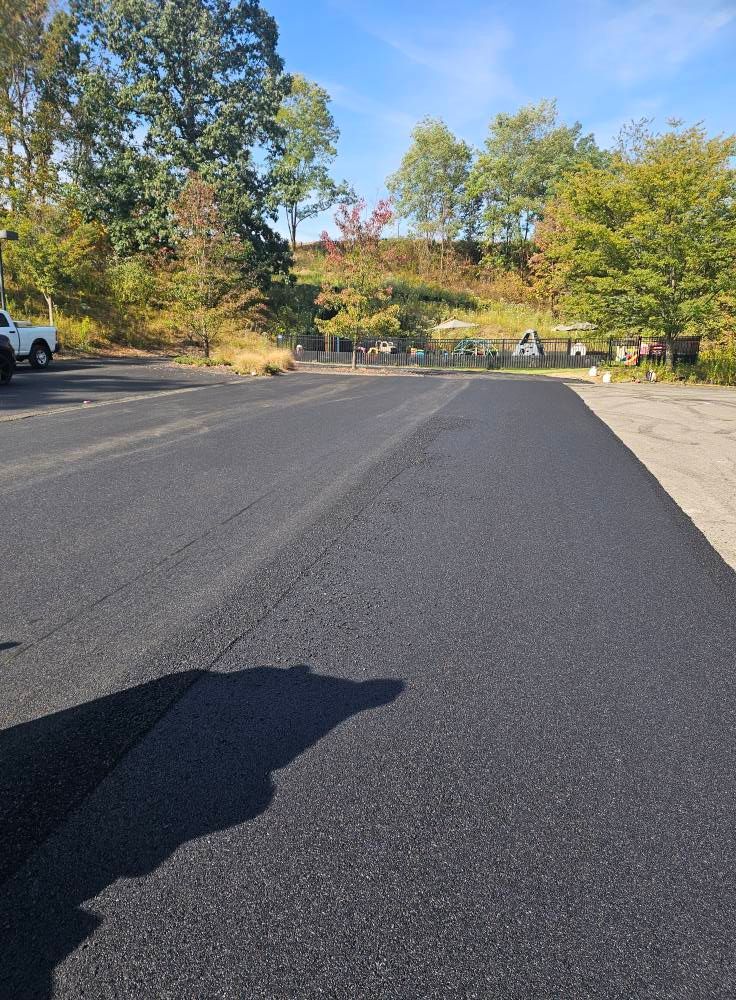
Once resurfacing is complete, you will notice the driveway or parking area looks darker, feels smoother, and sheds water more effectively. The surface will be free of cracks, rough patches, and faded areas, and it will handle vehicle traffic without the bumps or unevenness that develop over time. Properly applied resurfacing also improves drainage by restoring the original slope and filling low spots where water used to collect.
Resurfacing is most effective when the base is stable, drainage is functional, and the damage is limited to the surface layer. It is not appropriate for pavement with deep structural cracks, base failure, or significant settling. Mike Bryer Paving evaluates each project individually to confirm that resurfacing will deliver a lasting result and not just mask underlying problems that will reappear within a year or two.
Questions People Ask Before Resurfacing
Before committing to resurfacing, it helps to understand how the work is done, how long the new layer will last, and what conditions make resurfacing a better choice than full replacement.
If your Greensburg property has asphalt that needs a fresh surface but not a complete rebuild, Mike Bryer Paving provides honest evaluation and careful resurfacing to restore smoothness and extend pavement life. Contact us to schedule an assessment and discuss your project in detail.